
How to Stop Second-Guessing Yourself and Make Decisions With Confidence
To stop second-guessing yourself, define the decision, set the evidence and deadline before you start, choose when you have enough information, and do not reopen the choice unless genuinely new facts appear. Decision confidence comes from a trustworthy process—not certainty about the future.
Why second-guessing feels responsible
Rechecking can look like care, intelligence, or caution. Sometimes it is. But repeated review after the relevant facts are known usually tries to remove uncertainty that no amount of thought can remove. Each reopening teaches you that your first decision cannot be trusted.
If the repetitive thinking isn’t about a decision at all, see How to Stop Overthinking Everything for the broader system this guide’s decision rules fit into.
Classify the decision
Ask whether the decision is reversible or hard to reverse. A restaurant, draft, shirt, or routine is reversible; decide quickly. A major financial, legal, medical, or career commitment deserves more evidence and qualified advice. Many people use life-changing scrutiny on reversible choices, draining energy needed for the important ones.
Write the decision in one sentence
Vague decisions expand. Replace ‘What should I do with my life?’ with ‘Will I apply for these three roles this month?’ Replace ‘Is this relationship right?’ with ‘Does the current pattern meet my stated requirements for respect and consistency?’ A narrow question can be answered.
Choose three criteria
More criteria do not always improve a decision. Select the three that matter most and rank them. For a course: useful skill, affordable cost, realistic schedule. Score each option, then inspect the result. Criteria make tradeoffs visible and reduce the temptation to chase a perfect option.
Set an information stop-rule
Before researching, decide what enough looks like: three credible sources, two estimates, one conversation with a qualified person, or thirty minutes of comparison. Without a stop-rule, every new result creates another branch. When the requirement is met, move to choice.
Use the 70-percent rule for reversible choices
If an option meets roughly seventy percent of your important criteria and the downside is manageable, decide and learn from action. The number is not scientific law; it is a practical reminder that waiting for a perfect match can cost more than adapting after a good-enough choice.
Create a reopening rule
Write: ‘I will reconsider only if X changes.’ X might be a new expense, a missed deadline, new evidence, or a broken agreement. Anxiety, a different mood, or the sudden ability to imagine another downside is not automatically new information.
Separate outcome quality from decision quality
A careful decision can produce a bad outcome because the world is uncertain. A careless decision can get lucky. Review whether you used the best available facts, respected your values, and considered reasonable downside—not whether you predicted everything.
Keep a decision log
For meaningful decisions, record the date, criteria, known risks, choice, and reopening condition. Review later. You will learn where your process works and where it needs adjustment. More importantly, you stop rewriting history and claiming you ‘knew’ an outcome after it occurred.
Example: choosing between two projects
You have two good ideas. Criteria are revenue potential, completion time, and fit with your audience. You score both, choose the stronger total, set a fourteen-day test, and define the reopening rule: reconsider only if the project misses two agreed milestones or new customer evidence appears. When doubt arrives on day three, you return to the plan instead of starting over.
Mistakes to avoid
Do not ask ten people until someone confirms the answer you want — that pattern is reassurance-seeking rather than decision-making; see how to stop seeking reassurance for a way to catch it before you ask. Do not confuse more tabs with better evidence. Do not make major decisions while highly activated if a short pause is available. Do not reopen because commitment feels uncomfortable. And do not use a fast rule for decisions that require professional guidance.
Use this today
Choose one exercise from this guide. Make it small enough to complete within twenty-four hours. Write what you will do, when you will do it, and what counts as completion. Confidence grows faster from completed evidence than from another hour of analysis.
Frequently asked questions
What if I make the wrong decision?
Build a response plan: what can be reversed, what can be repaired, and what you would learn. A recoverable imperfect choice is often better than endless paralysis.
How long should I spend deciding?
Match the time to consequence and reversibility. Minutes for low-cost reversible choices; longer and with qualified input for high-impact commitments.
Is second-guessing the same as careful thinking?
Careful thinking adds relevant evidence or clarifies tradeoffs. Second-guessing often repeats the same evidence in search of emotional certainty.
Related Rewired Mind guides
For the research-informed ideas behind these practical frameworks, see the science behind Rewired Mind.
Not sure this is where you're stuck? Take the free 60-second quiz to find out which pattern is actually running the show, and which Rewired Mind system fixes it first.
Start the Free Quiz →Decide before the loop takes over.
Confident in 60 Seconds is a decision system for people who overthink, delay, and reopen choices they already made — decide faster, hold the call, and recover cleanly when one goes wrong.
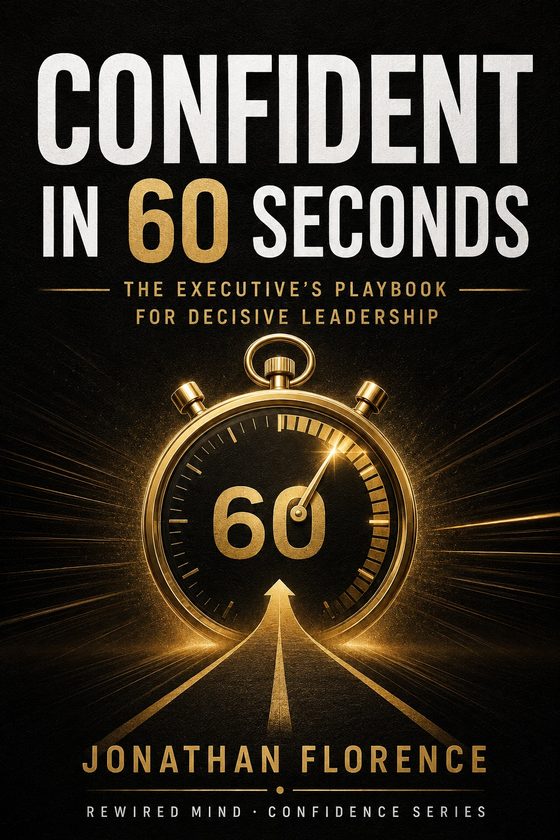
Confident in 60 Seconds
The Executive's Playbook for Decisive Leadership
$19.99Digital PDF — Instant Download · 108 pages
Get the Digital PDF — $19.99Also: Kindle eBook — Amazon — $6.99 · Paperback — Amazon — $14.99
Want the wider 7-day rebuild instead? The Confidence Reset System on Kindle — $6.99
Rewired Mind provides educational personal-development information, not medical treatment, psychotherapy, diagnosis, or individualized clinical advice. If distress is persistent, severe, or interferes with daily functioning, consider speaking with a qualified licensed professional.