
How to Stop Seeking Reassurance
Reassurance can bring real relief in the moment — the trouble is that repeated reassurance-seeking tends to reinforce the urge to check again the next time uncertainty shows up, rather than resolving it. This guide walks through a 4-step system for catching the urge, understanding what's underneath it, and building a way to settle uncertainty that doesn't depend on someone else answering.
What reassurance-seeking actually is (and why the relief doesn't last)
The short-term relief, long-term cost pattern
Asking "are we okay?" or "did I do that right?" almost always works in the moment — someone answers, the discomfort drops, and it feels like the problem is solved. Repeated reassurance-seeking can become a pattern because asking brings relief in the moment without necessarily resolving the uncertainty underneath it. When doubt returns, asking again can start to feel like the quickest route back to relief.
Why asking again never actually settles it
Each answer only covers this one instance. The underlying uncertainty — will I always be liked, will I always get it right, will something always turn out fine — was never actually answerable, so it reappears with the next situation, and the next question forms to cover it. That's why reassurance can be asked for constantly without ever running out of reasons to ask again.
The 4-step system to stop seeking reassurance
Step 1: Catch the urge before you ask
Notice the moment right before you're about to ask — a text about to be sent, a question forming, a search you're about to type. The urge usually has a specific feel to it: a spike of doubt paired with the sense that one more answer will finally make it go away. Catching it in that window, before the message is sent, is what makes the rest of the steps possible.
Step 2: Name what you're actually afraid of
Put the fear underneath the question into one plain sentence — not "I need to ask if this is okay," but the actual worry: "I'm afraid I upset them," "I'm afraid I made the wrong call," "I'm afraid something is wrong and no one told me." The question you were about to ask may be an attempt to settle this deeper fear. Naming it directly is often more useful than the answer you were about to go looking for.
Step 3: Delay the ask on purpose
Set a short, specific delay before you're allowed to ask — ten minutes, an hour, until tomorrow morning, depending on the situation. The delay isn't a punishment; it's a test of whether the urge is still there once the initial spike passes. The purpose of the delay is to give yourself a chance to see whether the urge changes before you act on it.
Step 4: Replace the ask with a self-check
Before you ask, or once the delay is up, run three questions instead of sending the message: What do I actually know? What am I predicting will happen? What action is actually available to me right now? Your answers may show that you already have enough information, that you are predicting an outcome you cannot currently confirm, or that the only useful action available is to wait and see.
A same-moment reset for when the urge hits right now
When the urge hits and you need something to do immediately, run this: write the question you want to ask, word for word, without sending it. Underneath it, write your honest answer to the three self-check questions from Step 4. Set a timer for ten minutes and do something else — physically put the phone down, start a task, step outside. When the timer ends, check the urge again and decide whether the question still needs to be asked. If texting is where this shows up most for you — checking for a reply, rereading what you sent, or wanting to send a follow-up — see anxious texting: how to stop checking your phone for the digital-specific version of this system.
Common mistakes that keep the cycle going
Do not treat every urge to ask as evidence that something is actually wrong — the intensity of the urge and the accuracy of the worry are two different things. Do not use a longer, more detailed message as a way to ask the same question again without noticing you're doing it. Do not skip Step 2 and go straight to delaying the ask; without naming the fear underneath it, the delay just becomes waiting, not progress. Do not expect the urge to disappear completely — the goal is to interrupt the pattern earlier and more often, not to never feel it again.
Frequently asked questions
Is reassurance-seeking the same as OCD?
Not necessarily. Reassurance-seeking shows up in everyday anxiety and uncertainty for a lot of people, and it can also be part of obsessive-compulsive disorder (OCD) for some. This guide is written for the everyday version and isn't a diagnostic tool or a substitute for treatment. If reassurance-seeking is severe, persistent, or interfering with daily life, a licensed professional can help you figure out what's underneath it and the right next step.
Why do I need reassurance so much?
One reason can be that asking brings relief in the moment. If uncertainty returns later, it can become tempting to seek another answer rather than sit with the uncertainty or rely on what you already know. Over time, that can turn reassurance-seeking into a repeated habit.
Is it ever okay to ask for reassurance?
Yes. Asking someone a genuine question when you're missing real information isn't the pattern this guide is about. The pattern worth interrupting is asking the same question, or a version of it, after you already have enough information to answer it yourself — that's usually about managing the feeling rather than getting new facts.
What if the reassurance-seeking is mostly in one relationship?
That's common, and the same four steps apply — catching the urge, naming the fear underneath it, delaying the ask, and running the self-check before you ask. It can also help to tell the other person directly that you're working on this, so a delayed or skipped question doesn't get misread as distance.
What if I've already asked and want to undo it?
You can't take the question back, but you can still run the self-check afterward. Treat it as information for next time rather than a failure — the goal isn't a perfect streak, it's noticing the pattern earlier each time.
Related Rewired Mind guides
For the research-informed ideas behind these practical frameworks, see the science behind Rewired Mind.
The cycle underneath the asking.
Reassurance-seeking rarely stays in one place — it moves from asking, to checking, to replaying. Stop the Loop is the full cognitive reset for that pattern: catch the loop early, defuse it in the moment, and become the steady one instead of the anxious one.
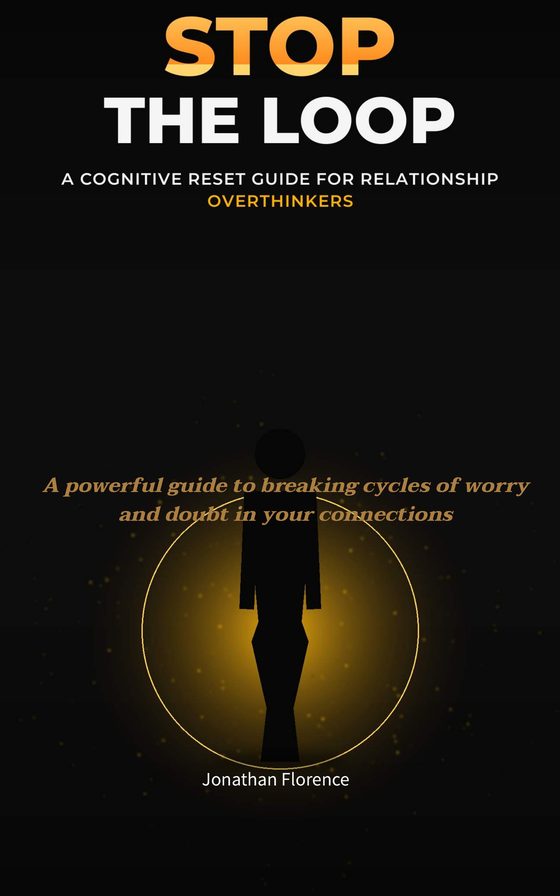
Stop the Loop
A Cognitive Reset Guide for Relationship Overthinkers
$19.99Digital PDF — Instant Download · 80 pages
Get the Digital PDF — $19.99Also: Kindle eBook — Amazon — $6.99 (free with Kindle Unlimited) · Paperback — Amazon — $14.99
Rewired Mind provides educational personal-development information, not medical treatment, psychotherapy, diagnosis, or individualized clinical advice. If distress is persistent, severe, or interferes with daily functioning, consider speaking with a qualified licensed professional.